
Union Budget 2026: Finance Minister Nirmala Sitharaman is set to present India Budget 2026 on 1 February, Sunday, marking a significant milestone for the country as she presents her ninth consecutive Budget.
This is the first time in recent history that the Union Budget is being presented on a Sunday, with the key session being previously held on Saturdays.
While the Budget is being presented on 1 February for the past many years, this has not always been the case.
Here is a history of how the date and time of presenting the Budget evolved over the decades.
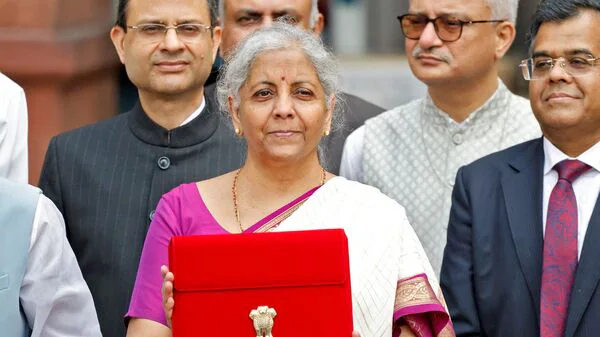
Tracing India’s Budget journey
The first Budget of independent India was presented on 26 November, 1947, by Finance Minister RK Shanmukham Chetty.
Since then, things have changed and India has gone forward to become one of the fastest moving economies in the world.
The Budgets have also evolved in these decades, with their dates and times being changed.
When was Budget presented before?
Till 2016, the India Budget was presented on the last working day of February. However, it was changed later.
Change in Budget date
In 2017, then Finance Minister Arun Jaitley made a historic move to shift the Budget date from the last day of February to 1 February. Since then, Union Budget has always been presented on 1 February, barring the times when interim Budgets were presented due to Lok Sabha elections.
Why was Budget date changed?
In 2017, the government changed the Budget date to streamline the process and ensure a timely presentation of Budget. Apart from this, shifting the Budget date ahead would mean that government and stakeholders would get more time to make changes before the financial year begins in April.
Budget time shift
For decades, the Budget was presented at 5 pm by the finance minister — a colonial-era practice which aligned with UK time zones. But in 1999, Yashwant Sinha moved to change the Budget presentation timing to 11 am.
Since then, the Budget is being presented at the Parliament at 11 am.
Union Budget 2026
Union Budget 2026 will be presented on 1 February, 2026, Sunday. Finance Minister Nirmala Sitharaman is set to present the Union Budget on this day.
This is the ninth consecutive time that FM Sitharaman is presenting the Budget.
Budget 2026 will focus on the growth of India to a historic place through allocation to different sectors. The key sectors to look out for this year include railways, infrastructure, urban development, manufacturing, auto, defence, electronics, MSME, renewable energy and AI among others.
Budget 2026: What key tax reforms has FM Nirmala Sitharaman introduced in the last five years?
Finance Minister Nirmala Sitharaman will present her ninth Union Budget on 1 February 2026. Over the past five years, she has reshaped India’s tax landscape by making the new regime the default, raising effective tax-free thresholds, overhauling capital gains rules, and introducing crypto taxation.
For the salaried class, the biggest anticipation around Budget Day remains one key announcement – changes to income tax.
During her tenure, Sitharaman introduced various tax reforms, including exemptions for lower-income brackets and revisions to capital gains tax. Budget 2023 made the new tax regime the default to simplify the filing process for taxpayers.
Ahead of Budget 2026, here’s a look at key reforms of the past five years.
No income tax up to ₹12 lakh
In her Budget 2025 speech, Sitharaman raised the effective tax-free threshold for salaried individuals to ₹12.75 lakh, including a standard deduction of ₹75,000. This provided significant relief to the middle class.
Earlier, Budget 2023 unveiled a simplified tax regime exempting taxpayers earning up to ₹7 lakh annually. With the standard deduction of ₹50,000, salaried individuals with incomes up to ₹7.5 lakh paid no tax under the new tax regime.
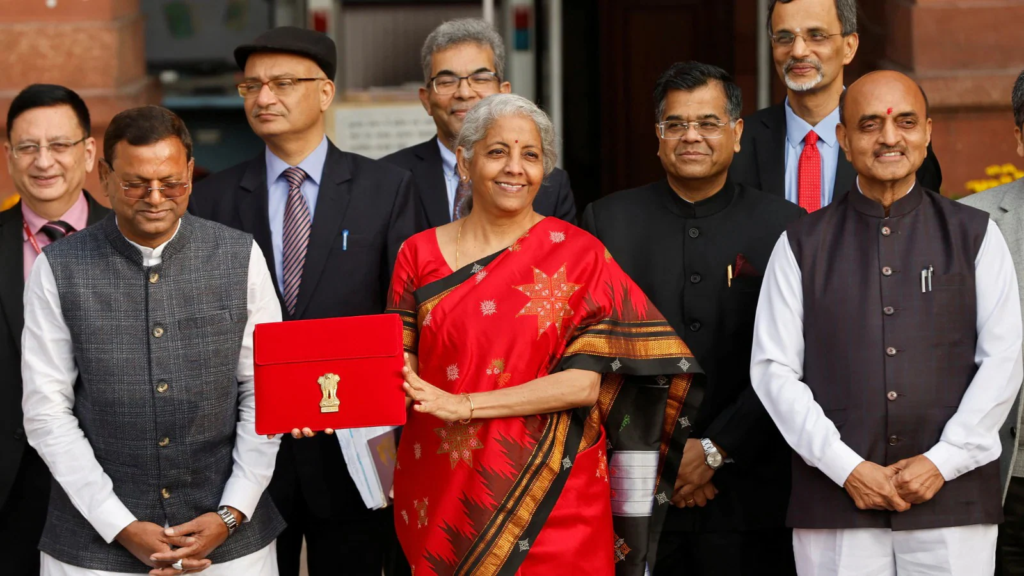
Capital gains reforms
Budget 2024 introduced sweeping changes to both short-term and long-term capital gains taxation.
The short-term capital gains (STCG) rate on certain financial assets was increased from 15% to 20%.
Before Budget 2024, long-term capital gains (LTCG) on equities exceeding ₹1 lakh were taxed at 10%. However, LTCG from properties and select non-equity assets, such as property and debt mutual funds, faced a 20% tax with indexation benefit. This benefit significantly reduced tax liability by adjusting gains against inflation-adjusted costs.
Budget 2024 made LTCG uniform at 12.5% across all asset classes, removed indexation, and raised the exemption limit to ₹1.25 lakh.
The Budget 2024 also redefined the holding period for various capital assets to qualify for LTCG and STCG. It established only two holding period thresholds: 12 months or one year for listed assets such as shares, listed bonds and equities, and 24 months or two years for other assets, including real estate and gold.
New tax regime
Budget 2020 introduced the new tax regime as optional, offering concessional tax rates but removing the benefits of certain deductions.
Budget 2023 made the new tax regime the default, requiring all taxpayers to file under it unless they opted for the old regime.
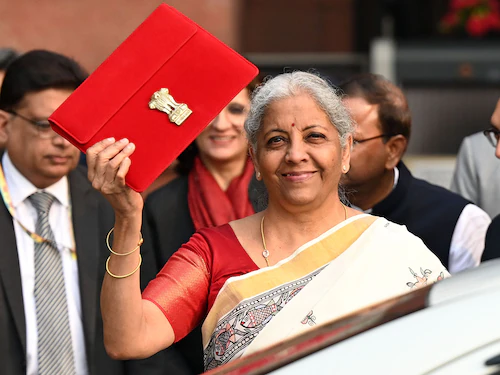
Standard deduction
In Budget 2024, the FM raised the standard deduction for salaried employees under the new tax regime to ₹75,000. She also increased the family pension deduction from ₹15,000 to ₹25,000 for those following the new tax regime the same year.
Budget 2024 introduced a new tax slab for those following the new tax regime. No tax up to ₹3 lakh; 5% tax between ₹3-7 lakh; and 10% tax between ₹7-10 lakh.
Tax on crypto assets
Budget 2022 imposed a 30% tax on virtual digital assets and an additional 1% TDS on transfers of these assets.
Re-opening of assessment
Budget 2021 reduced the time limit for reopening assessments from six years to three. In serious tax evasion cases involving concealment of income of ₹50 lakh or more in a year, assessments could be reopened for up to 10 years.
❓ FAQs: Why Is the Union Budget Presented on 1 February?
Q1. Why is the Union Budget presented on 1 February?
The Union Budget is presented on 1 February so that it can be approved by Parliament before the new financial year starts on 1 April, ensuring smooth implementation of policies and spending.
Q2. When did India start presenting the Budget on 1 February?
India began presenting the Union Budget on 1 February from 2017, replacing the earlier tradition of late February presentations.
Q3. Who changed the Budget date to 1 February?
The change was introduced by the NDA government led by Prime Minister Narendra Modi, with Arun Jaitley as the Finance Minister.
Q4. What was the earlier date for the Union Budget presentation?
Before 2017, the Union Budget was usually presented on the last working day of February.
Q5. What are the benefits of presenting the Budget earlier?
An earlier Budget allows ministries to plan better, speeds up fund allocation, avoids delays caused by interim budgets, and supports faster economic growth.
#UnionBudget #Budget2025 #IndianEconomy #UnionBudgetHistory #BudgetDay #February1 #Carrerbook #Anslation #FinanceMinistry #EconomicPolicy #IndiaBudget #BudgetFacts